









Railroads Opened New Paths for American Agriculture
Railroads played a major role in transforming American agriculture and rural America as the nation expanded westward and communities became increasingly connected. What began as a developing transportation concept eventually became a critical part of the agricultural economy, providing farmers with new ways to move crops, livestock and other goods to growing markets.
In this American Agriculture History Minute, Mark Oppold explains how the earliest American railroads developed and how the railroad system helped change the way rural America moved and traded agricultural products.
The Early Idea of a Rail Highway
The concept of what could be described as a “rail highway” was first conceived by Colonel John Stevens in 1812. At the time, the United States was still developing its transportation infrastructure, and moving agricultural commodities over long distances could be difficult and expensive.
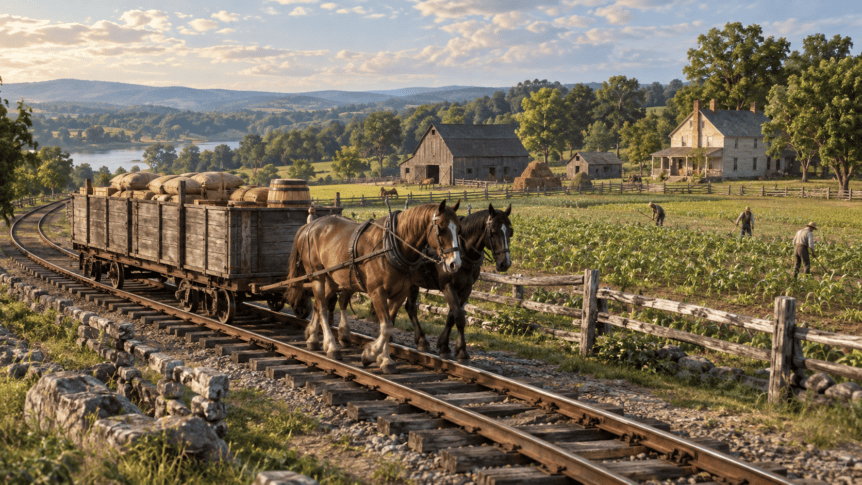
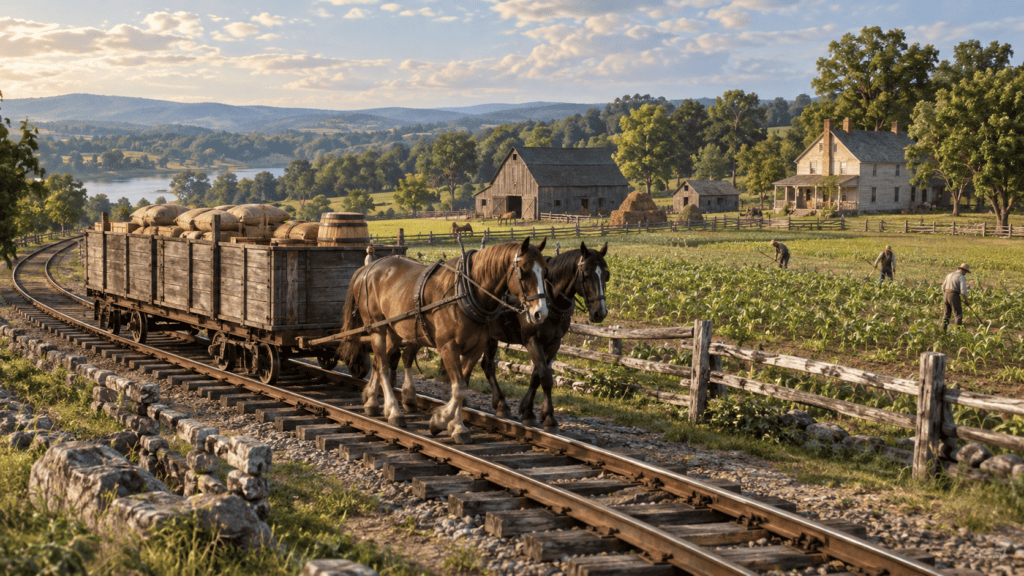
The earliest railroads were quite different from the locomotive-powered systems Americans would eventually know. Early rail cars were horse-drawn and traveled along tracks, offering a developing alternative to traditional roads and other forms of transportation.
As railroad technology progressed, these early systems laid the groundwork for a transportation network that would eventually stretch across much of the United States.
The Granite Railway Makes History
One of the important early milestones came in Massachusetts with the Granite Railway. The railroad was the first chartered railroad in the United States and was approximately three miles long.
Completed in 1826, the Granite Railway demonstrated the potential of rail transportation at a time when the nation’s transportation system was rapidly evolving. Although extremely short by modern standards, the railroad represented an important step toward the larger rail network that would eventually connect rural communities, farms and cities.
Baltimore and Ohio Railroad Advances Rail Transportation
The Baltimore and Ohio Railroad marked another significant development. In February 1827, it became the first railroad to carry both freight and passengers.
The ability to transport freight by rail was particularly important for a growing agricultural nation. Rail transportation would ultimately provide farmers and rural businesses with greater access to markets and help connect production areas with population centers.
As railroad networks expanded in subsequent decades, agriculture benefited from improved transportation connections. Farmers could increasingly participate in markets beyond their immediate communities, while rural towns could become more closely connected to regional and national commerce.
A Transportation Revolution for Rural America
The development of railroads was part of a much larger transformation in American agriculture. Improved transportation helped rural communities become less isolated and created new opportunities for farmers to move agricultural products.
The railroad would eventually become one of the most important pieces of America’s agricultural infrastructure. Its development helped establish the foundation for the highly interconnected agricultural marketplace that exists today.
Mark Oppold’s American Agriculture History Minute highlights these important moments in the history of American agriculture and the rural communities that helped build the nation.