








A Farm Wife Helping Shape Agricultural Youth Education
The history of 4-H can be traced to the efforts of people who believed young Americans should have meaningful opportunities to learn about agriculture and develop practical skills. Among those early contributors was Jessie Shambaugh, a farm wife who became active in her community and dedicated herself to helping young boys and girls gain a foothold in agriculture.
Shambaugh recognized the importance of introducing young people to agriculture at an early age. Her work helped encourage boys and girls to understand agriculture’s role in their communities while giving them opportunities to participate in organized agricultural activities.
The Clover Pin Becomes a Symbol
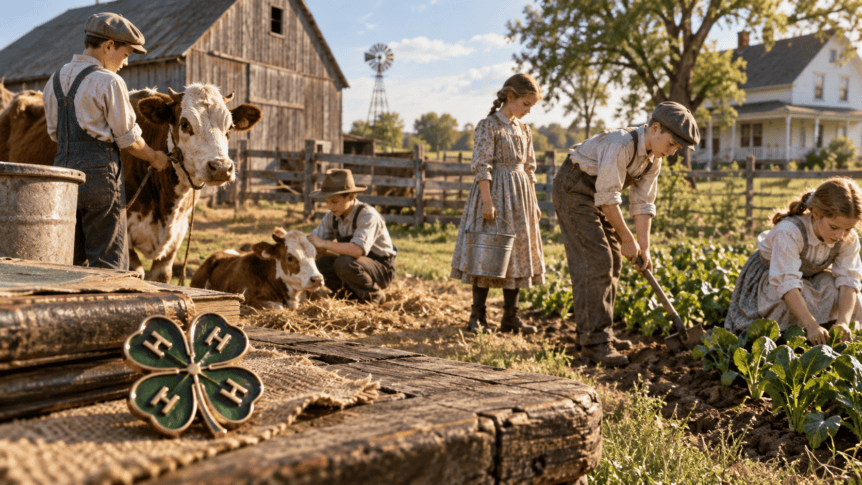
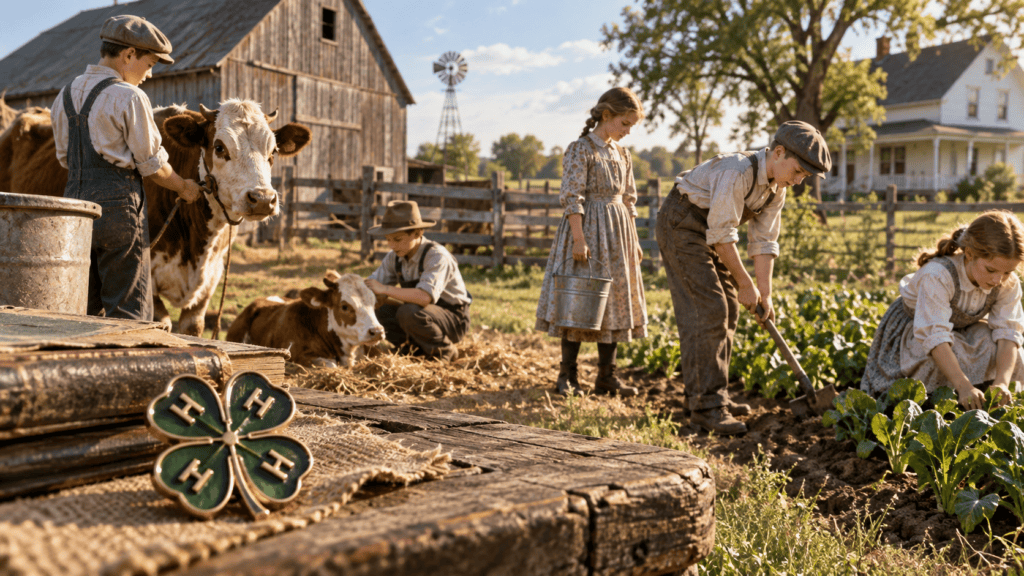
In 1910, Shambaugh developed a clover pin to give to some of the young people involved in these early agricultural groups. The design featured a letter H on each leaf, creating a symbol that would become closely associated with the youth agricultural movement.
The clover design represented an effort to give young participants a recognizable identity while reinforcing the values of agricultural education and community involvement.
By 1912, the groups of boys and girls were being called 4-H clubs. The name and clover symbolism would eventually become recognized throughout the country as part of one of America’s most enduring youth development organizations.
The Smith-Lever Act and the Growth of 4-H
The development of 4-H also coincided with major changes in how agricultural education and outreach were organized in the United States.
With passage of the Smith-Lever Act in 1914, the foundation for a national Cooperative Extension System was established, helping provide the structure through which agricultural education and youth programs could expand. The legislation helped firmly establish the national framework associated with 4-H.
What began with community-minded individuals such as Jessie Shambaugh and local groups of boys and girls grew into a nationwide movement connecting young people with agriculture, education and their communities.
More than a century later, the history of 4-H continues to reflect the importance of giving young people opportunities to learn by doing and to better understand the agricultural industry that feeds and supports communities across America.
American Agriculture History Minute is presented by Mark Oppold.