









Company logos can become powerful symbols of American agriculture. The leaping deer associated with John Deere and the checkerboard pattern long connected with Ralston Purina are instantly recognizable examples. But one of agriculture’s most distinctive symbols—a bald eagle perched on a globe—has a remarkable connection to the Civil War and a famous Wisconsin military mascot.
In this installment of the American Agriculture History Minute, Mark Oppold explores the story behind the eagle and globe associated with the Case farm equipment tradition.
J.I. Case Builds an Implement Company
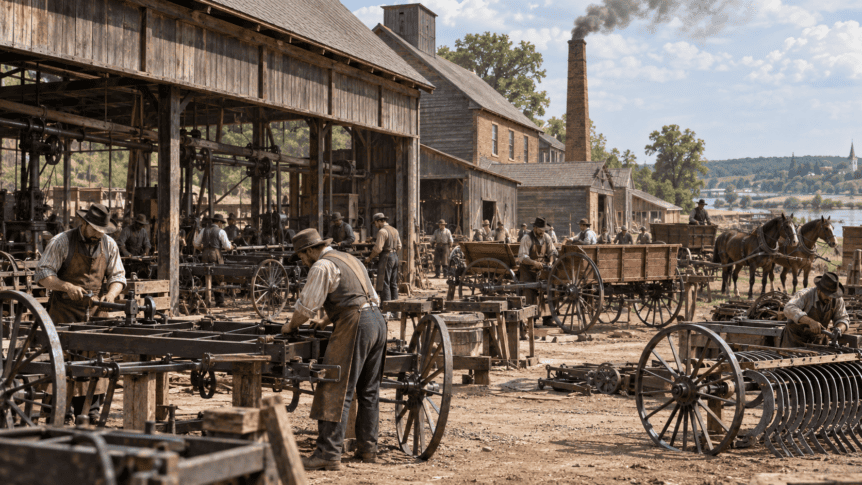
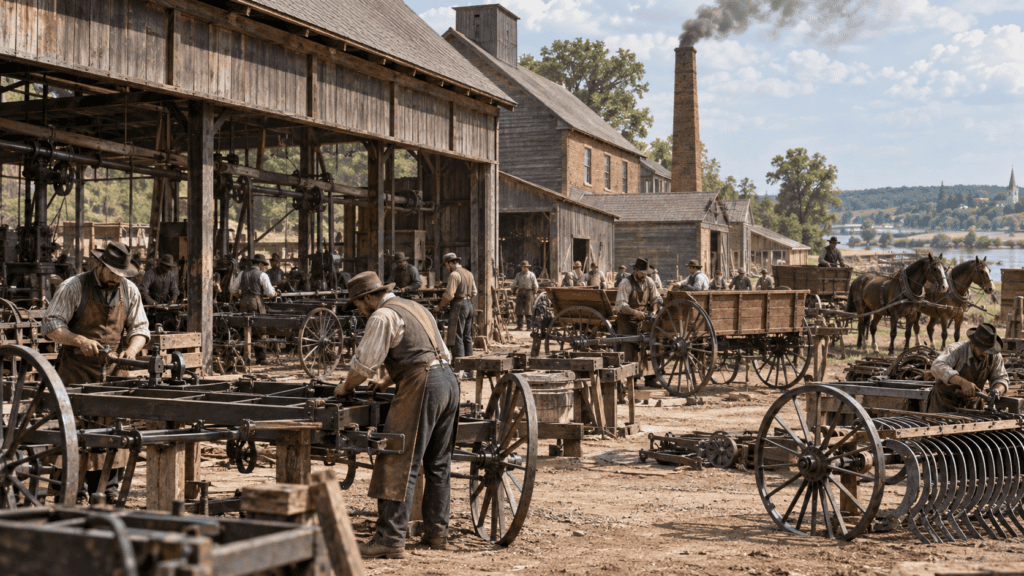
J.I. Case began his agricultural implement company in 1847. In those early years, however, Case wasn’t concerned with creating a memorable corporate identity or developing a recognizable logo. His priority was much more immediate: selling farm equipment and keeping his young company financially afloat.
Like many American manufacturers of the nineteenth century, Case’s operation was affected by events far beyond the factory. The outbreak of the Civil War created significant challenges for businesses across the country, including agricultural equipment manufacturers.
The Civil War Changes the Workforce
When the Civil War began, many of the workers at Case’s manufacturing operation left to serve in the Union military. Their absence created a serious challenge for the company, which depended on skilled workers to manufacture its agricultural implements.
But the story took an unexpected turn when some of those Wisconsin soldiers eventually returned home.
Among them were members of the 8th Wisconsin Volunteer Infantry Regiment, a unit that became particularly famous for having an unusual mascot: a bald eagle named Old Abe.
Old Abe had become a well-known symbol of the regiment. The bird accompanied the soldiers and became closely associated with Wisconsin’s Civil War history.
Old Abe Inspires the Case Eagle
J.I. Case was reportedly impressed by the famous bald eagle. When the soldiers returned from the war, Case adopted the eagle as a symbol for his company.
The image was eventually represented as an eagle standing on a globe, creating one of the most recognizable symbols in the history of American agricultural machinery.
The eagle and globe became closely associated with Case equipment, connecting the company’s agricultural machinery to a distinctly American story of manufacturing, military service and Wisconsin history.
A Logo With a Story Behind It
Today, corporate logos are carefully designed elements of a company’s marketing strategy. In the nineteenth century, however, some of the most enduring agricultural symbols developed much more organically.
The Case eagle is a good example. What began with J.I. Case’s admiration for a bald eagle associated with Wisconsin’s Civil War soldiers evolved into a lasting visual identity for Case agricultural equipment.
For generations of farmers, seeing the eagle and globe on Case machinery became more than simply recognizing a manufacturer. It represented a connection to the company’s long history and to an important chapter in American history.
The story also demonstrates how deeply agriculture, manufacturing and American history have been intertwined. Farm equipment companies weren’t developing in isolation; they were shaped by the same wars, economic changes, workers and communities that shaped the nation itself.
The Legacy of the Case Eagle
The bald eagle remains one of America’s most enduring national symbols, and its connection to Case equipment gives the image an especially meaningful place in agricultural history.
From the company’s founding in 1847 to the challenges created by the Civil War and the return of the 8th Wisconsin Volunteer Regiment with its famous mascot, the story behind the Case eagle illustrates how a historical event can leave a permanent mark on an American company.
The next time you see the eagle and globe associated with Case equipment, remember that the symbol traces its story back to J.I. Case, Wisconsin’s Civil War soldiers and a remarkable bald eagle named Old Abe.
This story was featured in Mark Oppold’s American Agriculture History Minute.