









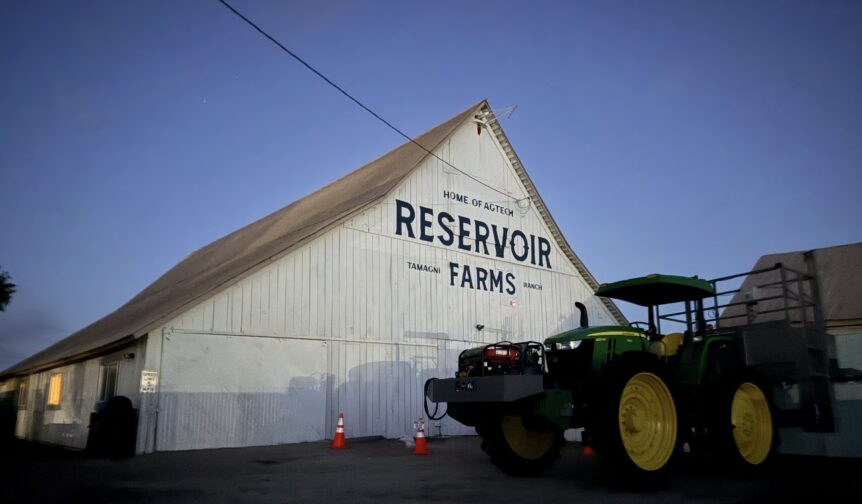
California agriculture is at a crossroads. Water infrastructure, labor availability, rising production costs, regulations and international competition are making it increasingly difficult for growers to remain competitive.
Danny Bernstein believes technology can help change that trajectory.
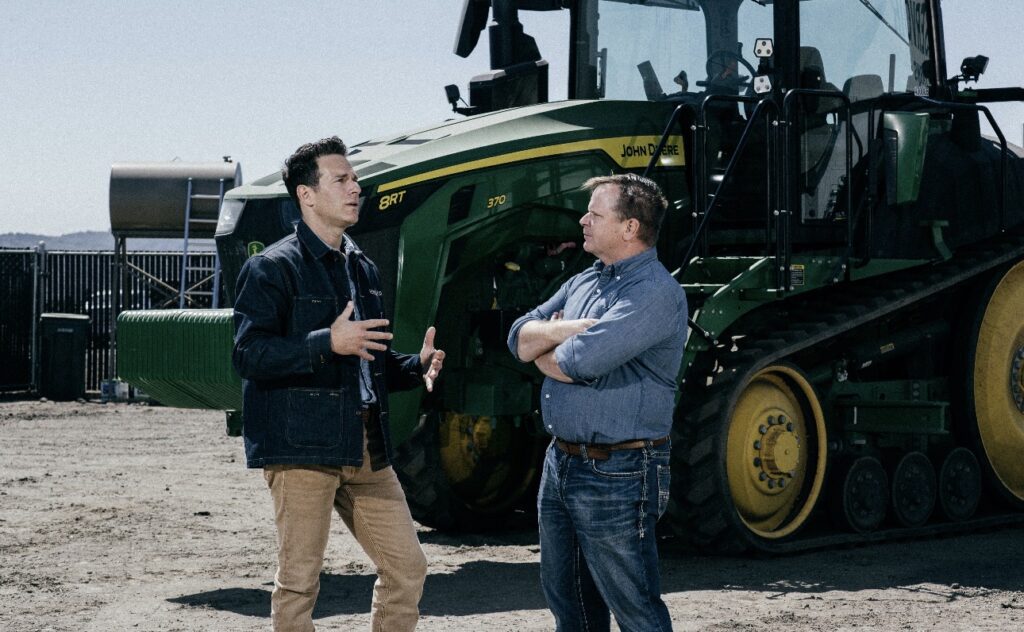
The CEO and managing partner of The Reservoir and Reservoir Farms recently joined Nick Papagni, “The Ag Meter”, for a wide-ranging discussion about agricultural technology, water, labor, automation, food security and the future of California farming.
Bernstein’s central message is straightforward: California needs to invest in technology and infrastructure if it wants to continue producing food.
Building Technology Communities for Agriculture
Bernstein created The Reservoir around the idea that agriculture needs the same kind of technical communities that exist in industries such as technology and defense.
The Reservoir currently has active locations in Salinas and Santa Rosa, with farms and startups operating onsite. Bernstein said 22 startups are now participating across the two locations.
The next major expansion is planned for the Central Valley.
Reservoir Farms is expected to launch at Merced College in fall 2027, next to the college’s food-processing operation and new agricultural technology facility. The project will include a 7,000-square-foot prototyping studio and onsite manufacturing capacity.
That manufacturing component could be especially important for agricultural startups.
Bernstein offered the example of a company developing an automated stone-fruit harvester. At Reservoir Farms, the company could potentially prototype and manufacture the machine in the heart of the Central Valley.
The facility will also create opportunities for students. Reservoir already has eight community-college interns at its Salinas operation, and Bernstein wants to bring that model to Merced.
The goal is to create technology jobs in agricultural communities rather than forcing young people to leave for Silicon Valley.
Technology Could Bring Crops Back
Bernstein believes agricultural technology can do more than improve existing operations—it could help bring lost crops back to California.
He pointed to asparagus as an example. California has lost more than 90% of its asparagus acreage over roughly two decades, largely because harvesting is extremely labor-intensive and expensive.
Production has increasingly shifted to Mexico and South America.
Bernstein sees that as a warning about how quickly an agricultural ecosystem can disappear.
“Tech is what’s gonna prevent offshoring of crops,” he told Papagni, arguing that the right technology could help California reclaim acreage and make crops economically viable again.
That includes combining automation with crop breeding so varieties can be developed with mechanical harvesting in mind.
A Changing Farm Labor Market
Agriculture is also competing for workers in a dramatically different labor market.
Young people today have opportunities that previous generations did not, including gig-economy jobs such as Uber and DoorDash.
Bernstein believes farm jobs therefore need to become more technical and compelling.
Modern agricultural jobs can involve machinery, electrical engineering, mechanical engineering and automation.
He cited American Farm Bureau figures indicating that more than 415,000 H-2A positions were advertised in fiscal year 2025, while only 182 received a domestic applicant—approximately 0.04%.
Bernstein said the numbers demonstrate that agriculture needs to rethink both its workforce and its approach to immigration.
He called for a rational immigration policy that recognizes America’s history as a nation built by immigrants while providing a workable system for people who want to work and contribute.
Water Infrastructure Is a Critical Issue
Water may be the biggest challenge of all.
Bernstein believes California has postponed water infrastructure investment for too long and needs a long-term strategy capable of supporting agriculture and communities for generations.
“We should be the Silicon Valley of water technology and the Silicon Valley of water infrastructure,” he said.
He argued that California has the financial and technological resources to develop better systems and suggested that policymakers consider innovative approaches, including competitive bidding and potentially private investment in infrastructure.
For Bernstein, water is directly connected to food security.
If California continues losing agricultural acreage, more of the state’s food supply will have to come from elsewhere.
“Food security is national security,” he said.
Growers Are Stewards and Entrepreneurs
Bernstein also challenged the perception that farmers are focused only on their individual operations.
He said growers are stewards of the land and think constantly about what they can pass on to the next generation.
They also think about the health of entire industries.
An almond grower and a tomato grower may compete in different markets, but both understand that the strength of California agriculture as a whole matters.
Bernstein said that interconnectedness is one of the things people outside agriculture often fail to understand.
Bringing Silicon Valley and Agriculture Together
Bernstein spent nearly 20 years in Silicon Valley, including time at Google and Microsoft.
While there, he noticed that technology and capital were often concentrated on solving the same problems repeatedly.
That led him to ask: Which industries aren’t getting enough technology?
Agriculture was one answer.
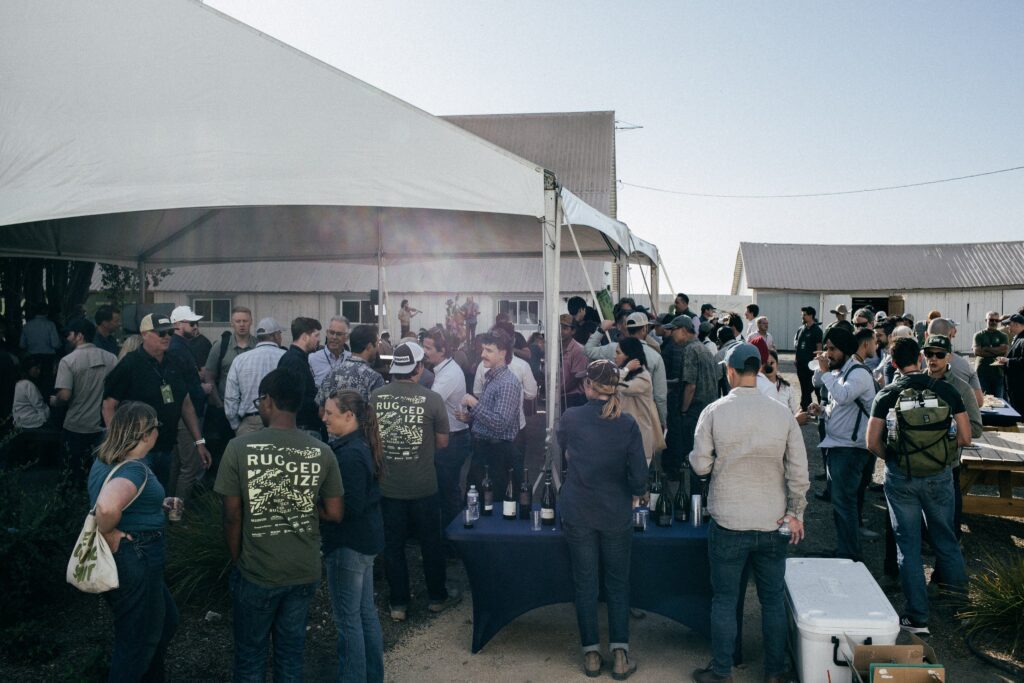
Bernstein believes Silicon Valley has an enormous opportunity to bring technology and investment into agriculture, but technology companies need to spend time in farming communities and understand agricultural problems firsthand.
Reservoir is working to build that bridge.
The organization has brought companies including Google, Nvidia and Amazon into conversations about agricultural technology and believes California’s technology and agricultural sectors can become stronger by working together.
John Deere Invests in California Ag Tech
That strategy received a major boost when John Deere and Reservoir signed a $10 million multi-year partnership.
Bernstein said the agreement will help direct John Deere’s research and development resources toward California agriculture and support homegrown startups addressing real agricultural challenges.
He credited Western Growers, including Dave Puglia, Walt Duflock, Ben Pallone and Ward Kennedy, with helping establish the relationship.
Stuart Wolf also supported the effort as chair of Western Growers.
Bernstein described the partnership as an example of California’s agricultural community coming together around innovation.
Data Centers and Rural California
The conversation also turned to the rapid growth of data centers.
Bernstein said technology companies have sometimes approached rural development clumsily, particularly when large facilities appear disconnected from the character of surrounding communities.
But he doesn’t believe rural communities necessarily have to reject data-center investment.
Instead, he wants communities to establish strong conditions for development.
If technology companies are going to invest billions of dollars in rural areas, Bernstein believes they should also invest in water infrastructure, schools, community centers and workforce upskilling.
He suggested that data centers could even contribute to water reuse and cleanup infrastructure.
The question, he said, should be how to turn technology investment into long-term rural prosperity.
The Future of Reservoir
Bernstein said Reservoir’s success ultimately won’t be measured by hype.
It will be measured by whether its technology works.
In the next few years, he wants to be able to show growers that a machine came through Reservoir, was developed and is successfully operating in the field.
He hopes to have multiple California locations operating, including the Central Valley facility at Merced College.
For Bernstein, the ultimate goal is to connect California’s agricultural strength with its technology strength.
That means better automation, stronger water infrastructure, more attractive agricultural careers and technology capable of keeping production competitive.
How to Connect With The Reservoir
Bernstein said people interested in following Reservoir’s work can subscribe to the organization’s weekly newsletter or contact the company through its website.
The Reservoir website is reservoir.co.
Bernstein joked that the company doesn’t own reservoir.com because someone would have to pay roughly $500,000 for it. Instead, Reservoir settled for reservoir.co, which it obtained for free.
Growers, entrepreneurs, students, technology companies and others interested in agricultural innovation are encouraged to get involved and provide feedback.
Can California Be Great Again?
Papagni ended the interview with a question that summed up the entire conversation: Can California be great again?
Bernstein’s answer was yes—but only if California connects what it does well in technology with what it does well in agriculture.
“If it links what it does well with tech and what it does well with ag into ag tech,” Bernstein said, “I think the answer is yes.”
That is the vision behind The Reservoir.
California has world-class agriculture, extraordinary technology expertise and an entrepreneurial farming community. Bernstein believes connecting those resources can help preserve farmland, bring crops back, create new jobs and strengthen food security.
He also offered a message directly to California growers, thanking them for continuing to produce food despite the challenges they face.
“Thank you for continuing to grow in California when we don’t make it easy,” Bernstein said.
Listen to the Full Interview
There is much more to Bernstein’s conversation with Nick Papagni, “The Ag Meter”, than can be covered here.
Hear Bernstein discuss the future of California agriculture, Reservoir Farms at Merced College, John Deere’s $10 million partnership, agricultural automation, the farm labor crisis, water infrastructure, Silicon Valley, data centers, food security and his vision for keeping agriculture in California.
Listen to the full interview with Danny Bernstein with “The Ag Meter” for the complete conversation and hear his ideas directly.