









From an Iowa Teenager to a Pioneer in Corn Breeding
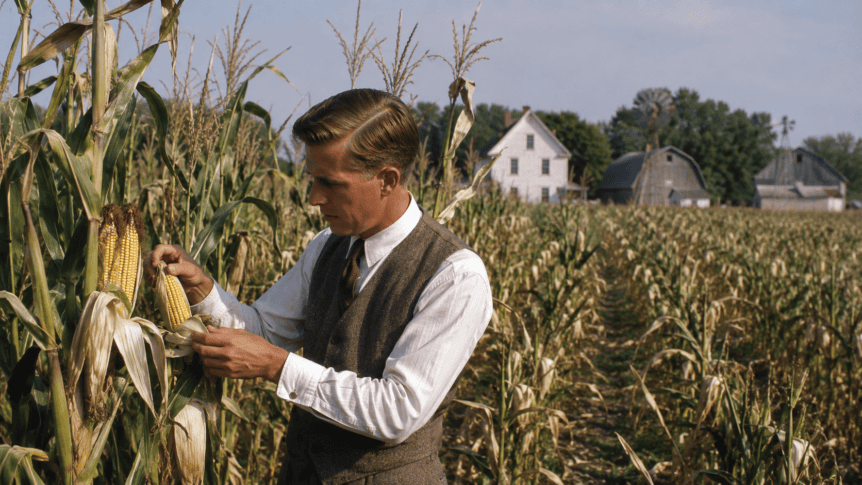
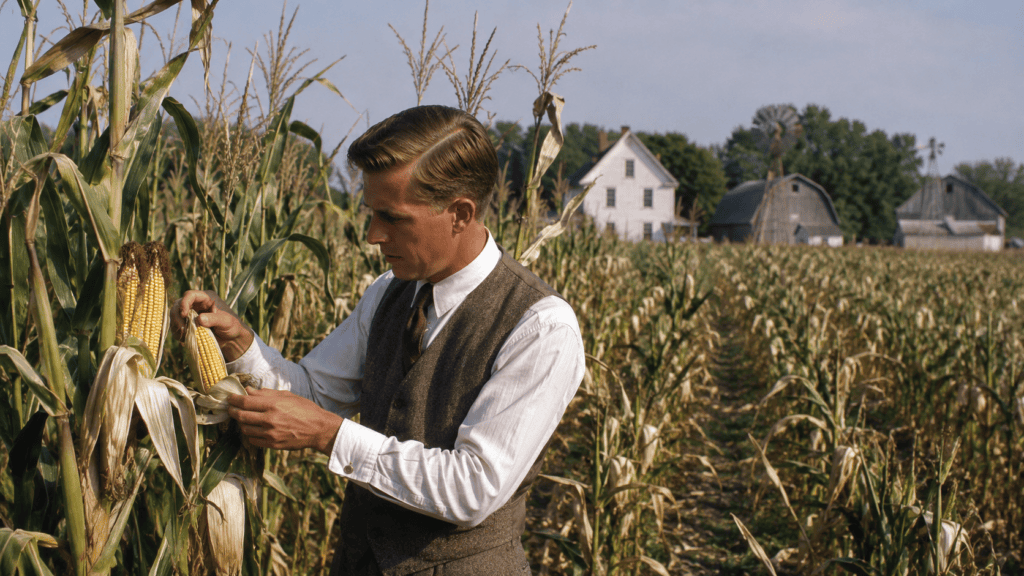
Long before hybrid seed corn transformed American agriculture, Henry A. Wallace was already experimenting with ways to help farmers produce more corn. His interest began when he was just 16 years old, when the Iowa high school student started field-testing corn with the goal of developing higher-yielding varieties.
Wallace continued his agricultural studies at Iowa State College, graduating in 1910. His education and early field experiments gave him a strong foundation in plant breeding, genetics and agricultural science. After graduation, he continued pursuing his interest in improving corn through systematic breeding and testing. Iowa State recognizes Wallace as a major figure in the development of hybrid corn and as the founder of the company that became Pioneer Hi-Bred.
Developing Higher-Yielding Hybrid Corn
During the years that followed, Wallace accelerated his corn-breeding experiments. His work focused on identifying and combining desirable characteristics in corn plants to improve performance and ultimately increase yields.
By 1923, Wallace had developed Copper Cross, a high-yielding hybrid that became an important milestone in his early breeding work. The significance of Copper Cross was not simply its performance in the field. It demonstrated the potential of carefully developed hybrid seed to deliver greater productivity than many traditional open-pollinated varieties.
The achievement helped establish Wallace as one of the early leaders in the commercial development of hybrid seed corn. Iowa State University describes him as having produced the first hybrid corn suitable for commercial use, while the university’s historical records credit him with beginning commercial hybrid seed production after his 1910 graduation.
Copper Cross Gains Recognition in Iowa
Wallace’s work quickly gained attention. In 1924, Copper Cross won a gold medal in the Iowa Corn Yield Contest, providing public recognition for the performance of the new hybrid.
That success helped demonstrate to farmers the potential of hybrid corn and contributed to the broader movement toward scientifically developed seed varieties. Hybrid corn would eventually become one of the most important technological advances in American agriculture, dramatically increasing productivity and helping reshape the U.S. Corn Belt.
Wallace’s early experiments were part of that larger agricultural transformation. His approach combined field testing, plant breeding and careful observation—methods that became increasingly important as agricultural science advanced.
The Beginning of Pioneer
Wallace’s work with hybrid corn ultimately led to the creation of a commercial seed business. In 1926, he and associates established the Hi-Bred Corn Company in Johnston, Iowa. The company later adopted the Pioneer name and became Pioneer Hi-Bred, building on Wallace’s pioneering work in hybrid seed development and commercial production.
The company would go on to become a major force in the seed industry. Iowa State University notes that Wallace and the founders of Pioneer helped create the first company dedicated to developing, producing and commercially selling hybrid corn seed.
Wallace’s influence extended far beyond the seed industry. He later became U.S. Secretary of Agriculture and Vice President of the United States, but his legacy in agriculture began with a teenager’s curiosity about how corn could be made to yield more.
A Lasting Agricultural Legacy
Henry A. Wallace’s early work illustrates how agricultural innovation can begin with a simple question: Can this crop be made better?
His answer came through years of experimentation, breeding and field testing. From his first corn experiments as an Iowa teenager to the development of Copper Cross and the establishment of a commercial hybrid seed company, Wallace helped lay the groundwork for the modern seed industry.
His contribution to hybrid corn remains an important chapter in American agricultural history. The development and commercialization of hybrid seed changed the way farmers approached crop improvement and helped establish plant breeding as a powerful tool for increasing agricultural productivity.
This story is featured in an American Agriculture History Minute with Mark Oppold.
American Agriculture History Minute
Mark Oppold’s American Agriculture History Minute highlights the people, inventions and milestones that helped shape American farming. Henry A. Wallace’s story is a reminder that some of agriculture’s most important breakthroughs began with experimentation in an Iowa cornfield.