









A Scottish Vision Comes to the Kansas Prairie
In 1873, Scottish cattleman George Grant arrived in Kansas with a bold vision for American agriculture. Grant came from Scotland as part of a group of British settlers who hoped to establish a community of wealthy, stock-raising families on the Kansas prairie. He settled in Victoria, Kansas, where he sought to develop the area into a productive livestock center.
Grant’s agricultural legacy, however, would become much larger than the settlement he helped establish. His name would become closely associated with the introduction of Angus cattle to the United States.
Four Angus Bulls Arrive in 1873
The most important part of Grant’s journey was the livestock he brought with him. In May 1873, Grant imported four Angus bulls from Scotland to Victoria, Kansas. These cattle represented one of the earliest significant introductions of Angus genetics to the United States and would ultimately help establish the breed’s foundation in American cattle production.
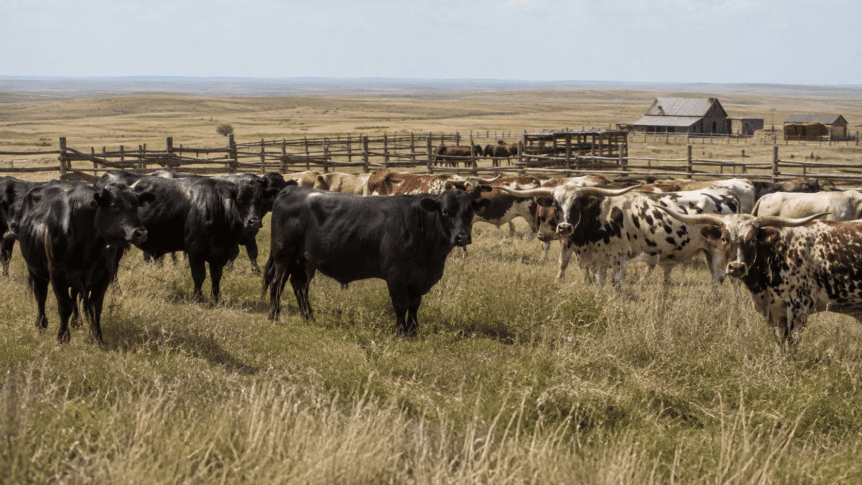
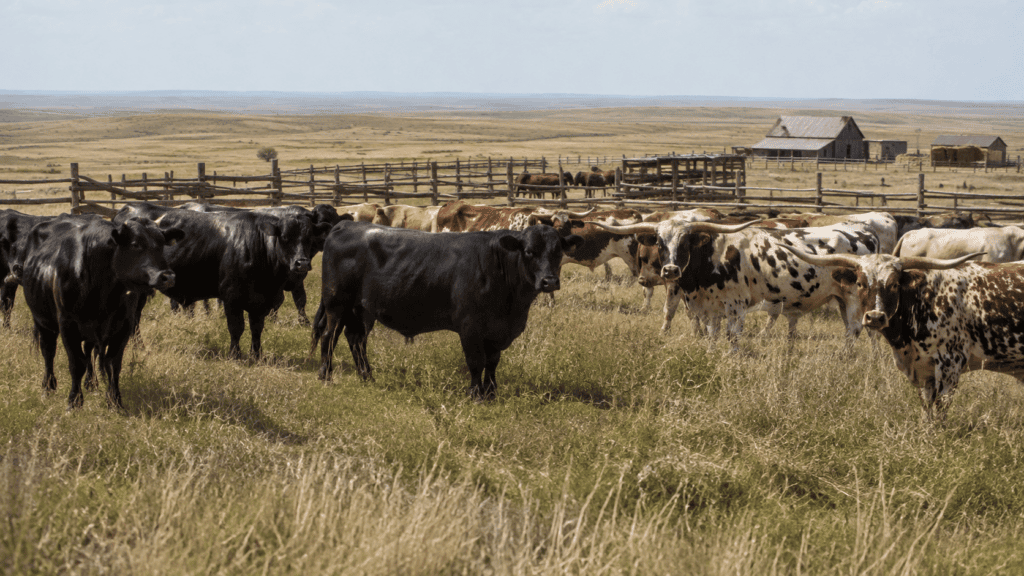
The black, naturally hornless cattle looked very different from many of the cattle American producers were accustomed to seeing at the time. Shorthorns were dominant in much of the cattle industry, while Longhorn cattle were also common across the Plains.
Grant recognized the potential of his Angus bulls and crossed them with native Texas Longhorn cows. The resulting calves were black and hornless and demonstrated qualities that made them well suited to the demanding conditions of the American range. According to the American Angus Association, the Angus crosses survived the winter well and weighed more the following spring, providing an early demonstration of the breed’s value in its new homeland.
An Unusual Breed Makes an Impression
Two of Grant’s bulls were exhibited at the Kansas City Livestock Exposition later in 1873. Their solid black color and naturally polled, or hornless, heads were unusual enough that some cattlemen reportedly viewed them as “freaks.” Yet what initially appeared unusual would eventually become one of the most recognizable traits associated with Angus cattle.
The performance of the Angus crosses helped demonstrate that the breed could contribute valuable characteristics to American cattle herds. What began with only four bulls would eventually grow into a major force in the U.S. beef industry.
Grant’s Legacy Outlasted the Victoria Colony
George Grant died in 1878, only five years after bringing the Angus bulls to Kansas. Many of the British settlers who had joined Grant’s Victoria colony eventually returned to their homeland. The settlement itself did not become the livestock empire Grant envisioned, but the cattle he brought to America left a lasting agricultural legacy.
The Angus breed continued to expand through additional imports and the efforts of American cattle breeders. In 1883, the American Aberdeen-Angus Breeders’ Association was established in Chicago, helping provide an organized foundation for the breed in the United States. The organization later became known as the American Angus Association.
Four Bulls That Changed American Cattle History
George Grant’s story is a reminder that major changes in agriculture do not always begin with large numbers. In this case, four Angus bulls transported from Scotland to the Kansas prairie in 1873 helped introduce genetics that would have an enormous influence on American beef production.
The men who came with Grant eventually moved on, but the cattle remained. From those four bulls grew a breed that became an important part of the American cattle industry and a lasting part of the nation’s agricultural history.