









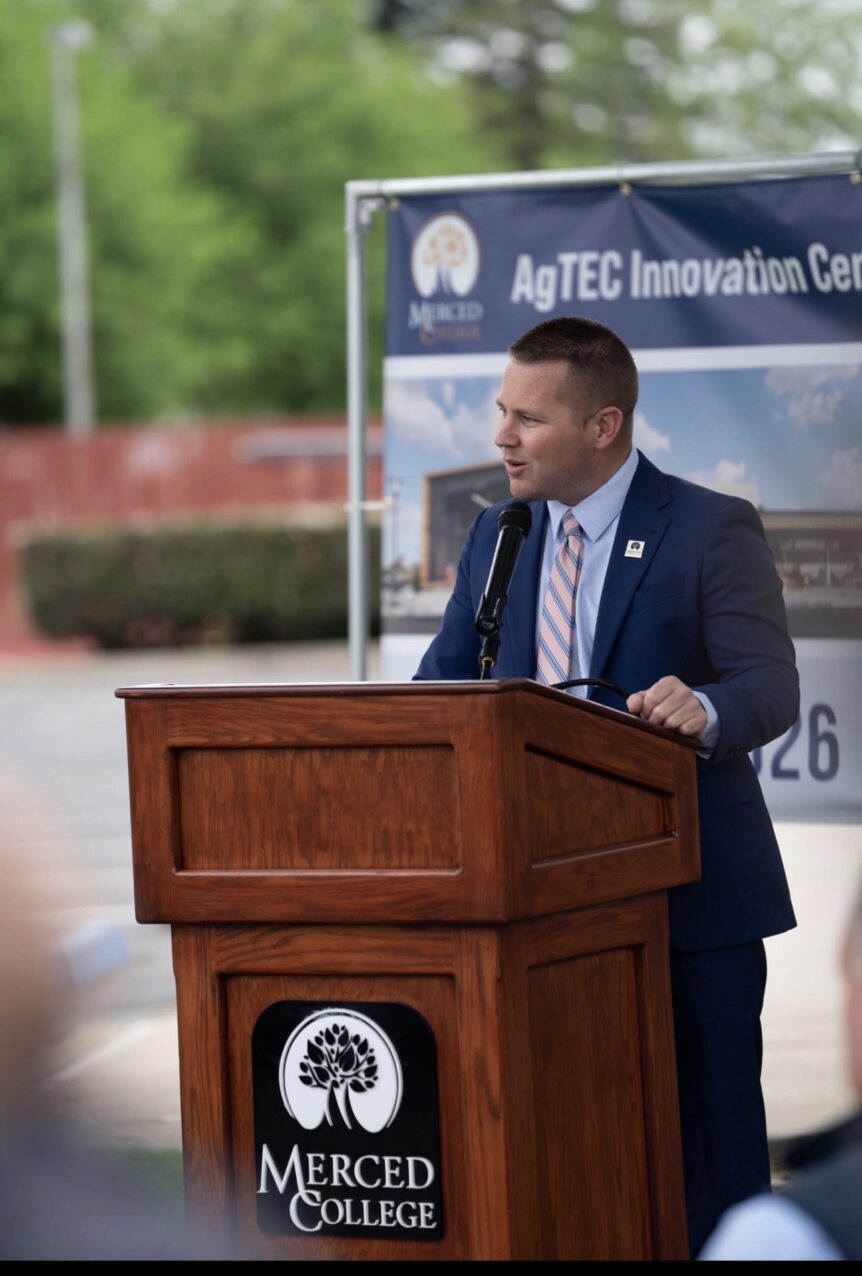

Merced College Is Rethinking Agricultural Education
For students considering a career in agriculture, food processing, agricultural technology or industrial technology, Merced College is building an educational model designed to put students directly into the middle of the industry.
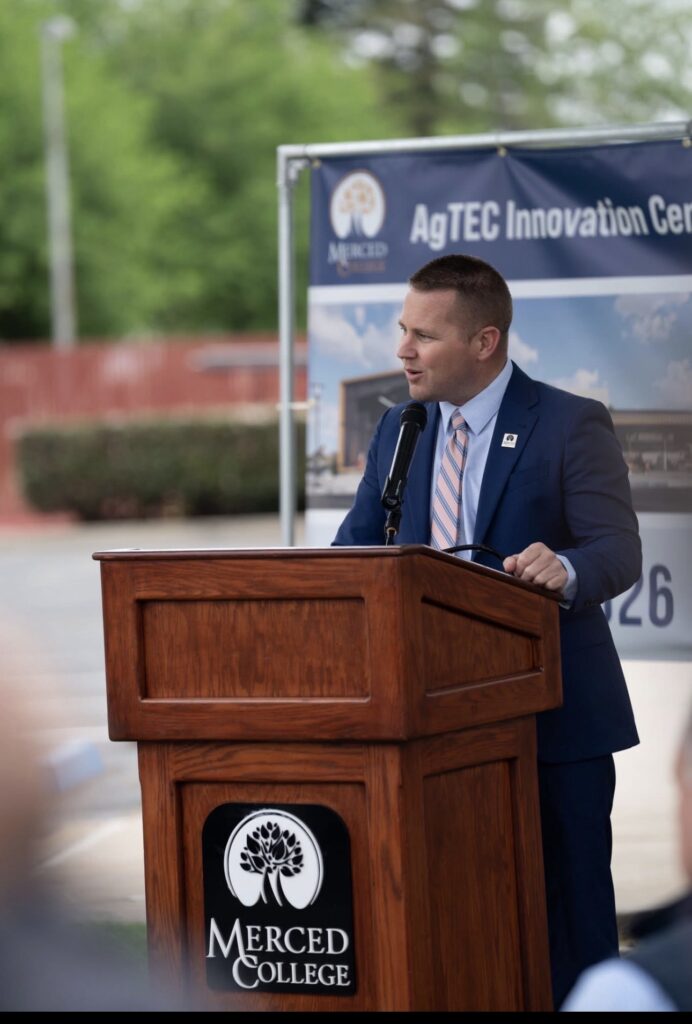
Dean of Agriculture and Industrial Technology at Merced College
Cody Jacobsen, Dean of Agriculture and Industrial Technology at Merced College, joined “The Ag Meter” Nick Papagni to discuss the college’s record enrollment, expanding agricultural programs, new technology, industry partnerships and ambitious plans for the future.
Jacobsen said the momentum at Merced College is significant, with nearly all of the more than 150 agriculture and industrial technology classes offered for the upcoming semester at maximum capacity. Overall enrollment is also expected to reach a record level of more than 22,000 students.
A 22,000-Square-Foot Food Processing Facility
One of the college’s most impressive projects is a new 22,000-square-foot food processing facility. The complex will include a meat processing laboratory, tree nut processing laboratory, fresh-market fruit and vegetable facilities, and a nutrition facility for research, development and product development.
A year-round retail farm market will connect the various components while serving students and the public.
Students will also train on advanced equipment including optical sorters, X-ray systems, metal detection, autonomous packaging systems and autonomous palletizers—technology they might otherwise have to wait until an internship or their first job to experience.
The college is also using competency-based education, requiring students to demonstrate mastery of important skills before advancing. Employers, according to Jacobsen, are already reporting that Merced College graduates are among their top employees because they bring practical experience, communication skills and workplace reliability with them.
Students Get Their Boots—and Their Hands—Dirty
Merced College’s agricultural education extends well beyond the classroom.
The college is redeveloping its farm with industry partners and has established a 10-acre almond block with the Almond Board of California. Duarte Nursery donated four almond varieties, while Sunridge and Dave Wilson Nursery are among the partners supporting the college’s four-acre stone fruit block.
The farm also includes table grapes and approximately 35 acres of row crops where students can gain firsthand experience working with soil, crops, irrigation and farm equipment.
Pacific Farm Management has also brought crews onto the farm to work with students, teaching them practical skills such as proper planting and irrigation-line layout. Jacobsen emphasized that these are skills students cannot fully learn from a textbook or PowerPoint—they need to work alongside experienced professionals in the field.
Agriculture Meets Drones, Robotics and Automation
Jacobsen said today’s agriculture students need both traditional farming skills and technological expertise.
Merced College continues to teach students how to operate tractors and perform conventional farm tasks, but it has also developed an agricultural technology program featuring drone operations and automation.
One pilot project involved 15 acres of winter wheat. Students planted one field using a drone while another field was planted using a traditional grain drill, giving them experience with both approaches.
Jacobsen said students are also showing strong interest in robotics and automated equipment. His goal is to ensure graduates can work on a technologically advanced farm while still being capable of operating in a more traditional agricultural environment.
FFA Students Have a Direct Pipeline
Agricultural education and FFA are major components of Merced College’s student pipeline.
Jacobsen estimates that more than 90% of the college’s agriculture students come from agriculture education and FFA programs. Merced College works closely with high schools throughout California and hosts two state FFA judging finals—the most of any California community college.
The campus also hosts California Welding State Finals, the Small Animal Contest and 14 other contests, bringing students from throughout the state onto the campus multiple times each year.
The college is also developing a summer cohort program that will allow high school agriculture students to visit campus and tour agricultural businesses throughout the Central Valley with a college instructor.
Industry Partnerships Drive the Programs
Jacobsen said Merced College wants industry involved directly in agricultural education.
The college signed a memorandum of understanding with the Almond Board of California and has hosted several industry events. Toro, whose irrigation equipment is used throughout the college farm, is also planning an industry event.
Duarte Nursery, Sunridge, Dave Wilson Nursery and other partners have contributed to the college’s permanent-crop development. The goal is to bring those companies onto campus for demonstration days and direct student training.
For employers struggling to find qualified workers, this industry-college connection could become increasingly important.
Training Workers for Food Processing
The Central Valley has numerous food processors, but Jacobsen said many employers tell him they do not have enough employees.
Merced College is responding by training students for the entire food-processing value chain.
The new innovation center will allow students to develop and test products and experiment with packaging such as pillow pouches, stand-up bags and resealable bags. Students can receive consumer feedback and learn what works—and what does not.
Jacobsen also stressed that today’s agricultural products must be marketed effectively. Quality remains essential, but businesses must also understand branding, packaging and consumer preferences in an increasingly competitive marketplace.

Merced College Looks Toward a Bachelor’s Degree
The college isn’t stopping with associate-level programs.
Merced College is developing an advanced food processing and agricultural technology degree with the goal of offering an applied bachelor’s degree on campus by 2028.
Jacobsen said the vision is an agriculture technology and food systems bachelor’s degree that combines advanced education with practical workforce skills. The college is working with partners including Fresno State and UC Merced as it develops the program.
The strategy reflects Jacobsen’s belief that agricultural education must stay ahead of industry.
Training students on outdated equipment would leave graduates unprepared, he said. Merced College therefore wants students working with current technology and equipment that reflects the realities of modern agriculture.
Preparing California Agriculture for the Future
Jacobsen also addressed the challenges facing California farmers and agricultural businesses.
He acknowledged that regulations, laws and equipment requirements can make farming increasingly difficult and expensive. In some situations, growers may face equipment investments costing hundreds of thousands of dollars.
His answer is education—of students, the public and policymakers.
Jacobsen believes California needs to better understand agriculture and remain proactive rather than reactive when developing policies affecting the industry. Losing touch with agriculture, he warned, could create serious consequences for the state’s food-producing economy.
Merced College also welcomes elected officials and policymakers to campus so they can see firsthand how public investments in agricultural education and facilities benefit students and the regional, state and national economies.
An Opportunity for Students, Parents and Employers
Perhaps the biggest takeaway from Jacobsen’s conversation with The Ag Meter is that a career in agriculture no longer requires every student to follow the traditional path of becoming a farmer.
Students can pursue farming, food processing, agricultural technology, drones, robotics, automation, product development, packaging and numerous other careers connected to agriculture.
And they can do it through an affordable community college pathway, potentially gaining specialized skills while avoiding significant student debt. Jacobsen said some students can spend one or two years at community college and move into careers with potential annual earnings exceeding $100,000.
For employers, Merced College is developing a pipeline of students who understand both the technical and practical sides of the industry.
How to Learn More About Merced College
Jacobsen encouraged prospective students, parents, employers and industry partners to visit Merced College and see the programs firsthand.
The best way to connect is through the Merced College website. Prospective students can search for the Agriculture or Industrial Technology departments, where Jacobsen’s contact information is available. Students can also be connected with counselors for enrollment, registration and class scheduling, while tours of the facilities and farm are available.
Merced College: Search for the Agriculture Department or Industrial Technology programs on the college’s website to contact Cody Jacobsen and arrange a visit.
Listen to the Full Cody Jacobsen Interview
For anyone interested in the future of California agriculture, this conversation is worth hearing.
In his interview with “The Ag Meter” Nick Papagni, Cody Jacobsen discusses Merced College’s remarkable growth, its new food-processing facility, agricultural technology, drones and robotics, FFA partnerships, hands-on farming education, workforce development, industry partnerships, the planned bachelor’s degree and the challenges facing California agriculture.
Jacobsen’s message is ultimately one of opportunity: agriculture is changing, and Merced College wants its students to be ready for what comes next.
Listen to the full interview between The Ag Meter and Cody Jacobsen to hear the story directly from the dean and learn why Merced College could be one of the most important agricultural education stories in California right now.
The college’s doors are open, and according to Jacobsen, the students are ready.