









Early Challenges for Colorado Settlers
Colorado’s agricultural story began with significant obstacles. Early settlers crossing what is now Nebraska and Kansas encountered land that seemed nearly worthless. “After a long dry trek, they saw little or no value when crossing over to what is now Colorado,” explains Mark Oppold in American Agriculture History Minute. The soil was sandier than in neighboring states, and rivers were largely unnavigable, making farming and transportation extremely difficult.
Mining Sparks Agricultural Growth
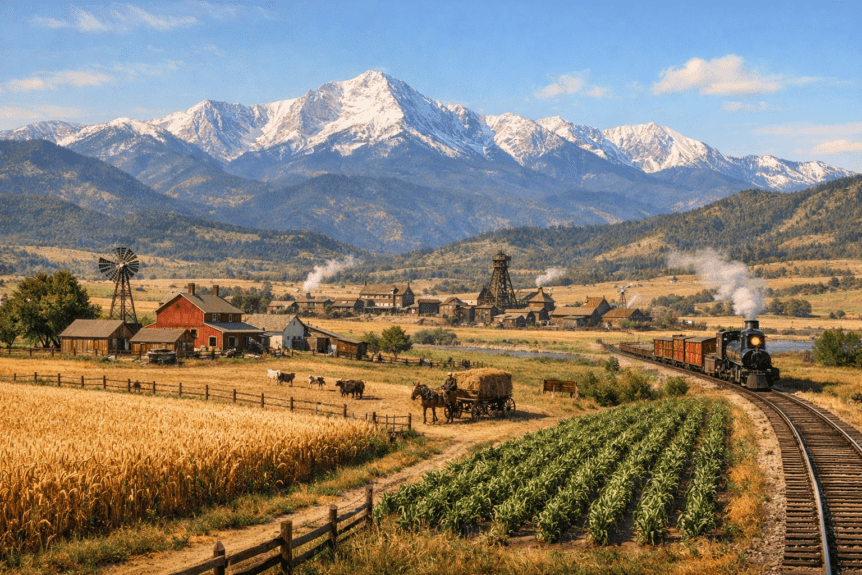
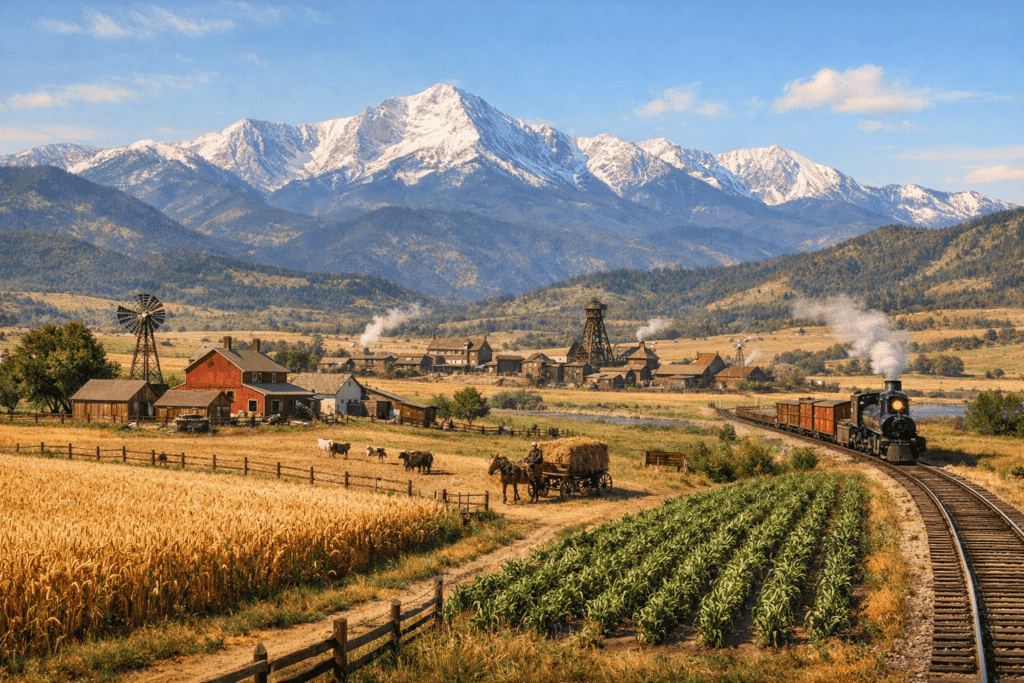
The discovery of gold and silver in the late 1800s changed everything. Mining strikes brought an influx of prospectors and entrepreneurs, creating an immediate need for food and supplies. Much of early Colorado agriculture developed to serve these growing mining communities, supplying fresh produce, grains, and livestock. Farmland that was once considered barren became essential to the state’s emerging economy.
Railroads Transform Farming and Settlement
Transportation played a pivotal role in the development of Colorado agriculture. Railroads reached Denver in 1870, allowing settlers and goods to travel by rail instead of wagon trains. This improved access not only encouraged population growth but also enabled farmers to ship products to distant markets, expanding the reach and profitability of Colorado farms.
A Legacy of Resilience
The early settlers’ ability to adapt to harsh conditions set the stage for modern Colorado agriculture. From sandy, challenging soils to farms supplying booming mining towns, their resilience and innovation became the foundation for a thriving agricultural sector that continues to evolve today.
Inspired by Mark Oppold’s American Agriculture History Minute.